

5-Minute Probiotic Miso Soup for Gut Health

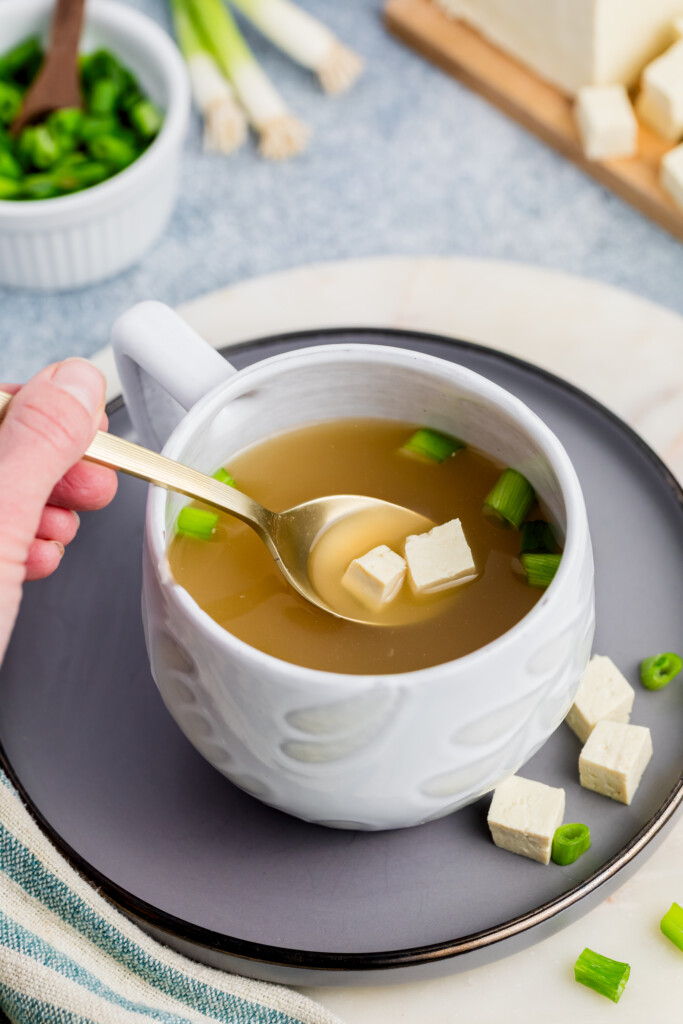
This is my 5-minute gut-health ritual I swear by: a warm cup of probiotic miso broth. It’s soothing, savory, and one of the easiest ways to work fermented foods into your day.

Save This Recipe
Miso is a fermented soybean paste that can contain live, beneficial bacteria to help support a thriving microbiome. And when your gut is happy, everything tends to run better—digestion, regularity, nutrient absorption, even energy and mood. One tiny ritual… big-time payoffs!
Research consistently links fermented foods with a healthier, more diverse microbiome—and this is one of the simplest (and tastiest!) ways to get those benefits. The prep is intentionally gentle because high heat can compromise those live cultures. So yes, this isn’t piping hot like restaurant miso soup… and that’s by design. No boiling = more probiotic potential.
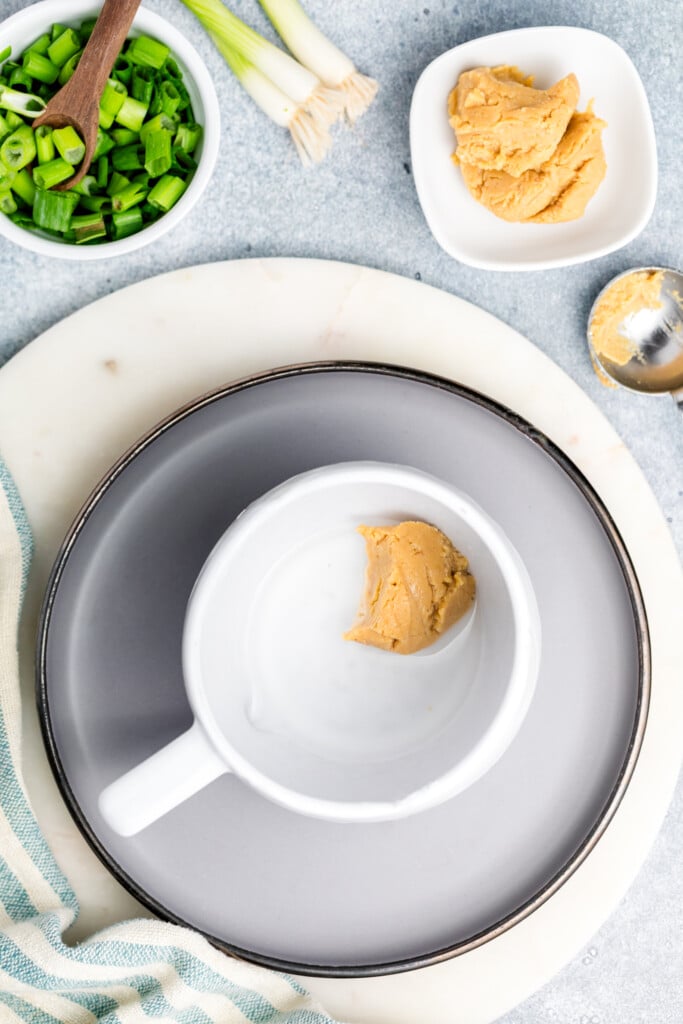
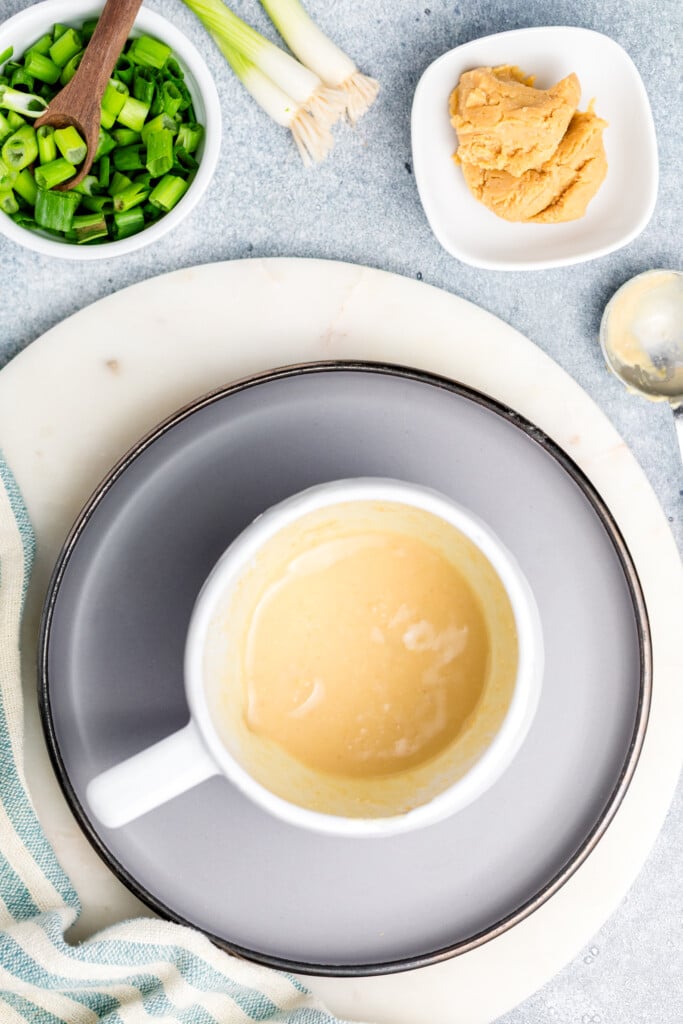
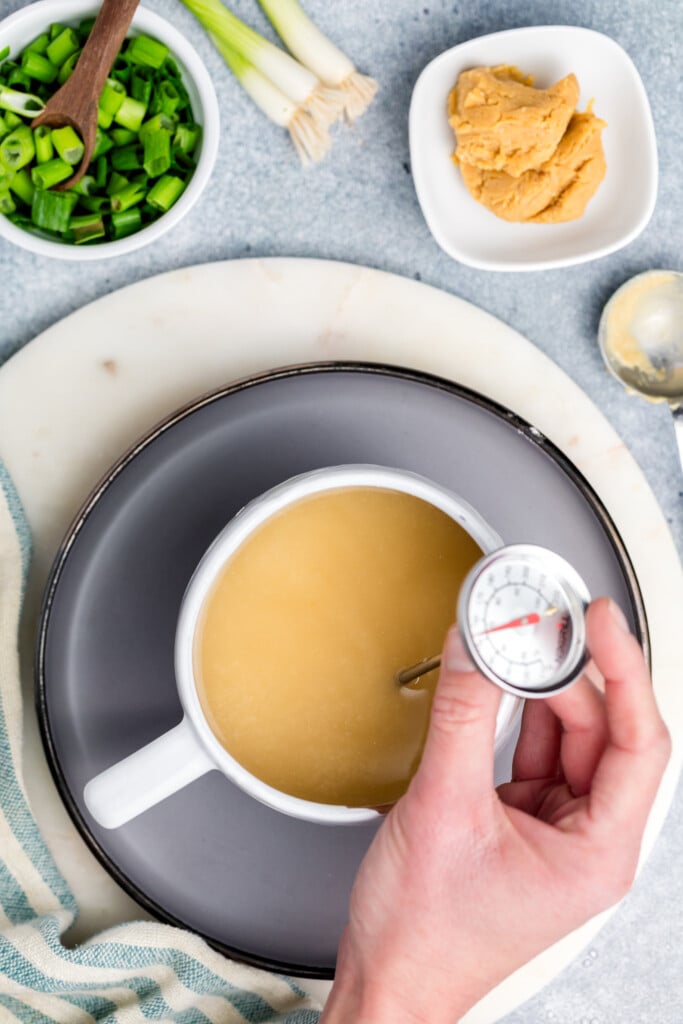
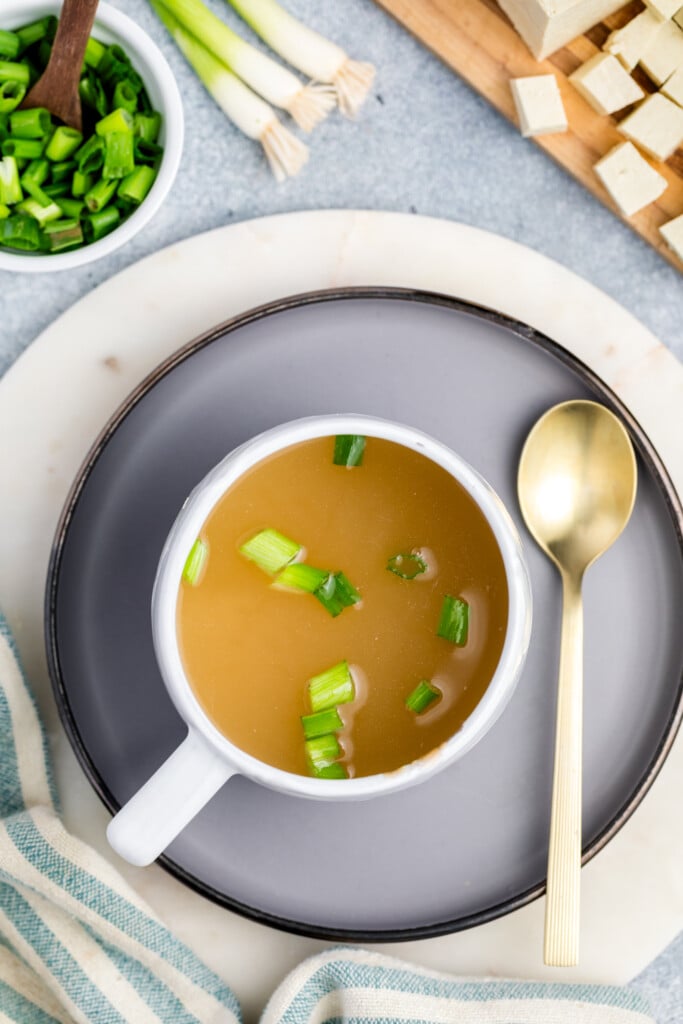
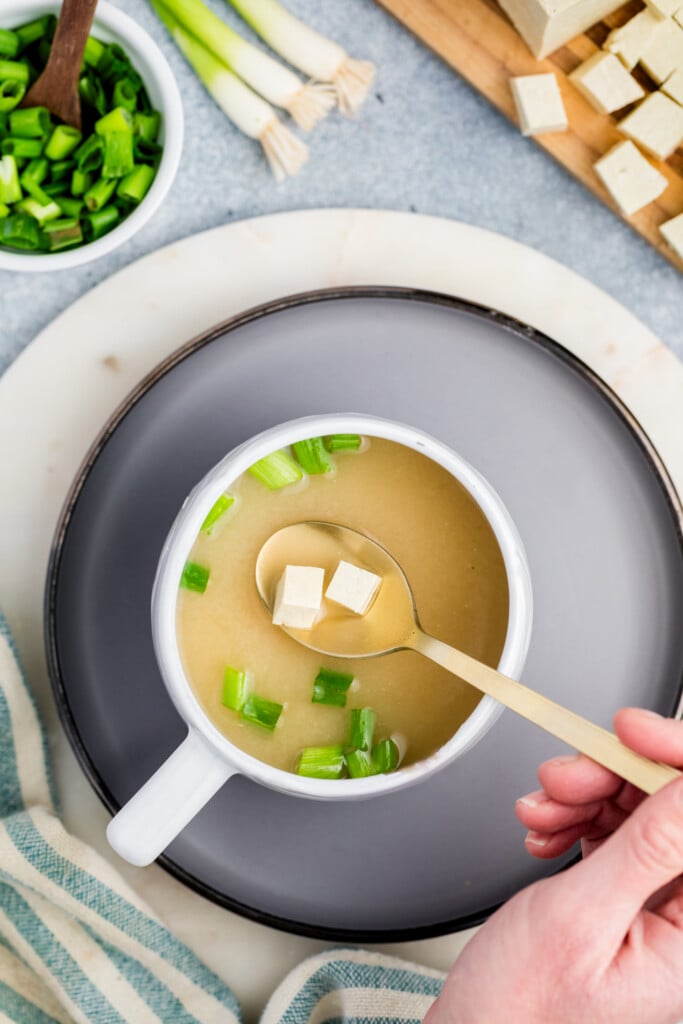
This version is stripped down to the essentials—no tofu, no seaweed—just a cozy, functional mug you can sip daily. But feel free to experiment and add in ginger, scallions, and more. I love adding a pinch of ground ginger to mine!
More miso? Try these recipes:
My anti-inflammatory RX: Ginger-Turmeric Cherry Tea!

5-Minute Probiotic Miso Soup for Gut Health
Ingredients
- 1½ cups reduced-sodium vegetable broth, chicken broth/stock, or bone broth
- 1 tablespoon white miso paste
Optional Flavor Add-Ins:
- ⅛ to ¼ teaspoon ginger powder
- ⅛ teaspoon sesame oil
- 1 teaspoon lemon juice
- ½ teaspoon soy sauce, or tamari
- ½ to 1 tablespoon chopped scallions
Instructions
- Make the miso slurry (smooth + probiotic-friendly): In a large mug, add 1 tablespoon miso paste. Stir in 2 tablespoons warm water (not boiling) and mix until completely smooth.
- Gently heat broth to protect probiotic activity (aim for ~120°F):Microwave method: Add 1½ cups broth (room temp or chilled) to the mug and stir well to combine with the slurry. If you’re using any optional add-ins, you can stir them in now. Heat in short intervals, checking with a thermometer, until the soup reaches about 120°F—that’s the sweet spot I aim for to help preserve probiotic activity. Microwaves vary, so once you find the timing that works for your microwave, you’ll be set. For me, it’s about 120 seconds.Stovetop method: Warm 1½ cups broth in a small saucepan over low heat, stirring occasionally. Use a thermometer and stop heating when it reaches ~120°F (warm and steamy, not simmering). Then pour the warm broth into your mug and stir into the miso slurry until smooth. You can add any optional seasonings either to the saucepan while warming or right in the mug after mixing.
- If it creeps a bit over 120°F, that’s okay—just try to keep it as close to (or under) 120°F as possible for best results.
- Sip and enjoy: Give it one last gentle stir and enjoy it warm—cozy, savory, and gut-loving.
Notes
- Use 1 teaspoon miso instead of 1 tablespoon. This simple swap cuts sodium significantly while still delivering fermented-food benefits.
- Choose low-sodium or unsalted broth (this makes a big difference). You can even use water.
- Skip salty add-ins like soy sauce (or use a tiny splash of low-sodium tamari if needed).
- Boost flavor without salt: add ginger, scallions, and/or a squeeze of lemon or splash of rice vinegar to perk it up.

Joy
I would like to use the miso but the sodium is way too high for someone with hypertension. So any suggestions.
I read labels
Thank you for your recipes. I have made some of them. Especially fresh blueberries in chocolate.
Iva
Hi Iva! First of all, I so appreciate that you read labels — that’s empowering and exactly what I encourage, especially with hypertension.
Unfortunately, miso paste is naturally very salty. It’s a bit of a conundrum (and I’ll admit — frustrating!) because it delivers so much gut-friendly goodness and deep umami flavor, but the sodium can add up quickly. Here’s how I’d tweak it:
-Use 1 teaspoon of miso instead of 1 tablespoon. That simple change cuts the sodium significantly (by about two-thirds compared to the full tablespoon).
-Definitely use low-sodium broth.
-Add a pinch of ground ginger to boost flavor, because when you reduce the miso, you’ll likely miss some of that salty punch.
You’ll still get the probiotic benefits, just in a more blood-pressure-friendly way.
And I’m so glad you’ve been enjoying the chocolate-covered blueberries too — those are such a fun little antioxidant treat. My husband requests them on repeat, ha! xx
I cant wait to try this recipe.Thank you for your detained information.
You’re so welcome, Claudia!
Very tasty! I only had brown miso. I hope that was ok. I will make again!
Hi Mody! Yes, brown miso works great here. It has a richer, deeper flavor than white miso, but it offers similar fermented-food and probiotic benefits. The main difference is taste, so your broth may have been a bit more robust and savory. So glad you enjoyed it and plan to make it again! — Eliza (Team Joy)
Can I add noodles or pouched egg?
Hi Diana! For sure! Sounds like a great addition. Enjoy! — Eliza (Team Joy)