
Healthier General Tso’s Chicken (easy one-skillet recipe)

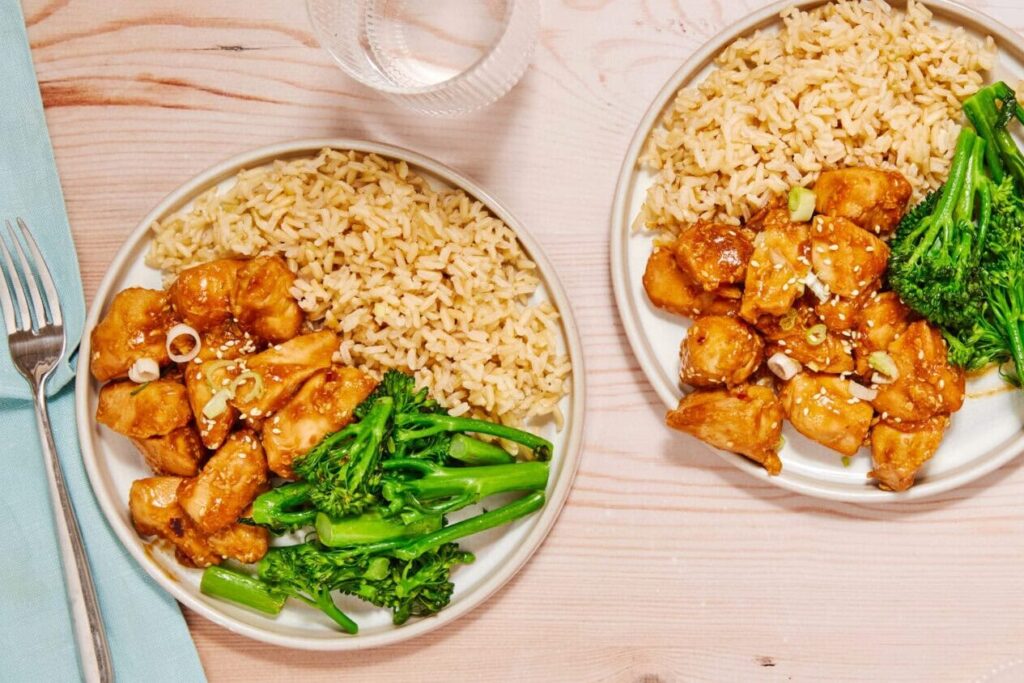
Sticky and sweet with a little kick, my Healthier General Tso’s Chicken delivers all the takeout-style flavor without any deep-frying or added sugar in the sauce! Bite-size chunks of chicken breast are coated in a luscious pineapple-soy glaze and finished with scallions and sesame seeds. Best of all, the cooking portion comes together in one skillet in about 20 minutes… I like to call it General Joy’s Chicken 😉
Save This Recipe
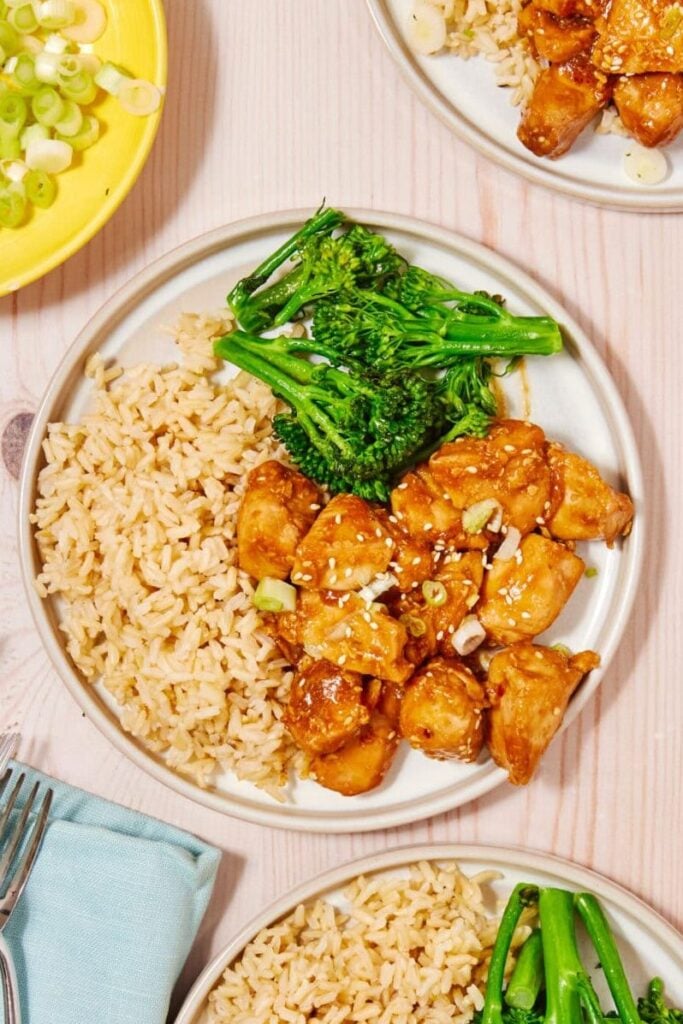
I love a recipe makeover that keeps the personality of the original while making a few thoughtful shifts. Here, lean chicken breast provides plenty of protein (about 35 grams per serving!), and simmering pineapple juice concentrates its natural sweetness, so there’s no need to stir sugar into the sauce. The result is a lighter dinner that still feels indulgent. And if pineapple and chicken are your dream team, try my One-Sheet Pineapple Chicken with Teriyaki Glaze or Grilled Teriyaki Chicken and Pineapple Skewers next!
For years, a grease-spotted Chinese takeout menu lived in our junk drawer and somehow survived two moves. Every time we ordered, someone in my crew chose the General Tso’s chicken, so creating my own spin felt inevitable. The pineapple glaze came from an experiment to build flavor without spooning in sugar, and once the juice simmered into a thick, almost caramel-like reduction, I knew I had something special!
The secret to tender chicken: velveting
That egg white in the marinade is intentional! It’s part of a Chinese cooking technique known as velveting, which helps chicken breast stay juicy over high heat. The egg white forms a delicate coating around each piece, protecting it from drying out as it cooks. It takes only about 30 seconds of whisking yet makes an impressive difference in the finished texture. Let the chicken marinate for at least 30 minutes (or prep it the night before and let it work its magic in the fridge).
Why this skillet earns rave reviews
- Takeout flavor, streamlined technique. You get tender chicken and a glossy glaze without battering or deep-frying.
- Naturally sweetened sauce. Reduced pineapple juice brings fruity sweetness with no added sugar.
- Plenty of protein. Lean chicken breast makes this a hearty, filling main dish.
- One-skillet cooking. Once the marinade and sauce are ready, dinner moves quickly with minimal cleanup.
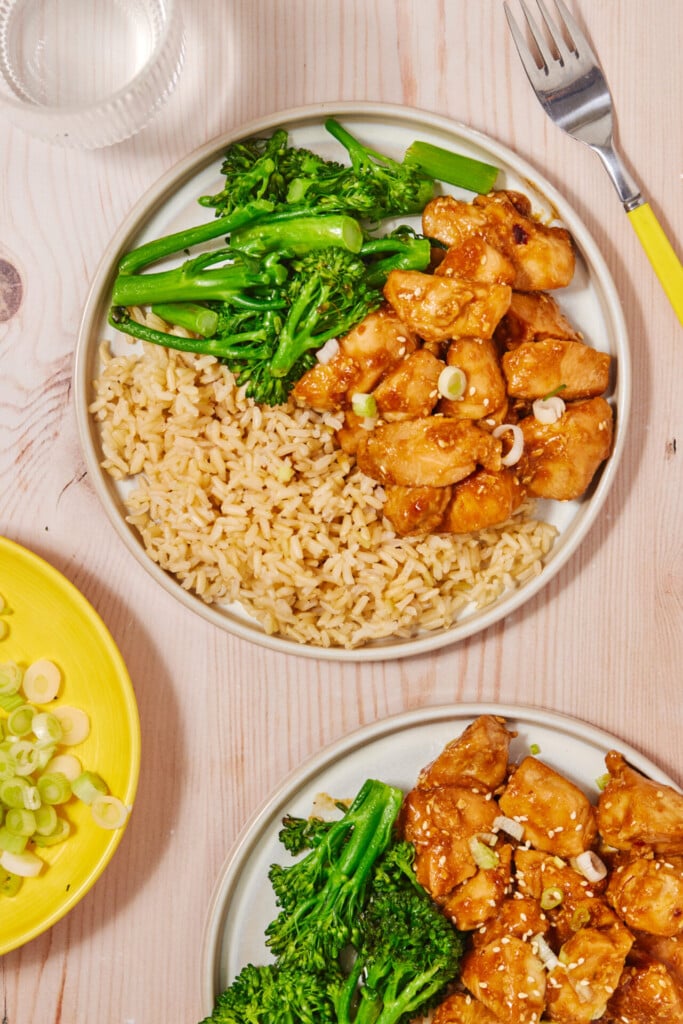
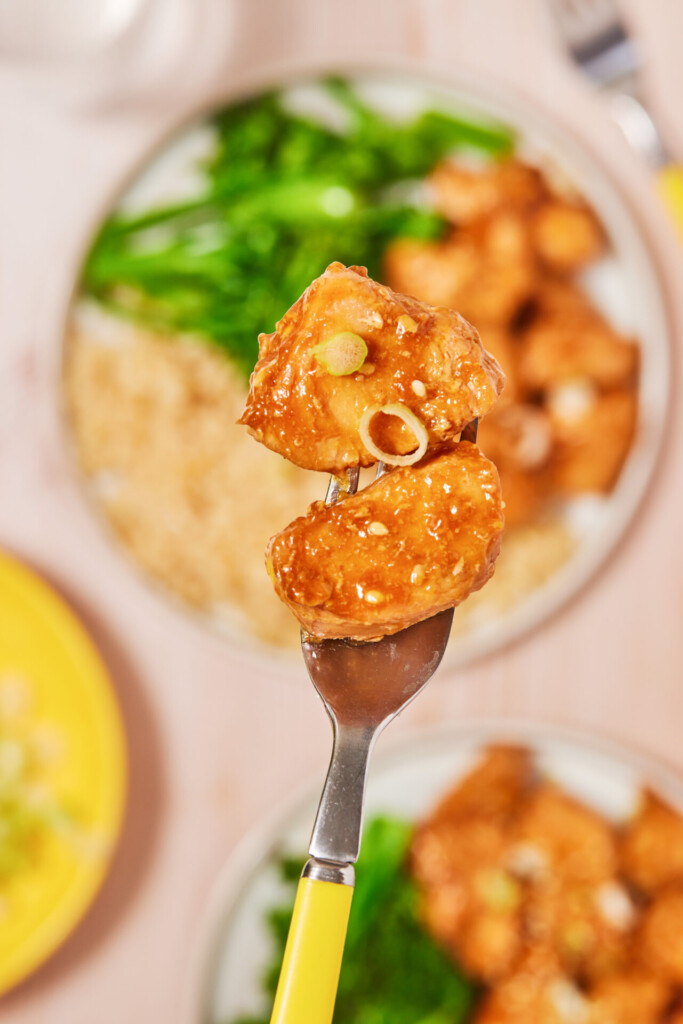
Serve it with steamed broccoli, bok choy, snow peas, or shredded cabbage for something fresh and green. This charred broccoli is also a terrific accompaniment. To catch every last drop of that shiny sauce, spoon it over brown rice, quinoa or my veggie-packed Cauliflower “Fried” Rice… or pair it with Crispy Oven-Baked Brown Rice.
If homemade takeout-style meals are your happy place, try my Egg Roll Bowls and Chicken and Broccoli Stir-Fry next!
Healthier General Tso’s Chicken (easy one-skillet recipe)
Ingredients
For the marinated chicken:
- 1 egg white
- 2 tablespoons reduced-sodium soy sauce
- 2 tablespoons Chinese rice wine or dry sherry
- 1½ pounds boneless, skinless chicken breasts, cut into 1-inch chunks
For the sauce:
- ¾ cup pineapple juice
- 3 tablespoons reduced-sodium soy sauce
- 1 tablespoon Chinese rice wine or dry sherry
- 3 tablespoons low-sodium chicken broth
- 1 teaspoon toasted sesame oil
- 1 teaspoon rice vinegar, see notes
- ¾ teaspoon garlic powder
- ¾ teaspoon ground ginger, or 2 teaspoons freshly grated ginger
- ¼ teaspoon crushed red pepper flakes
- 1 tablespoon cornstarch or arrowroot flour, see notes
To finish:
- 6 scallions, white and light green parts thinly sliced
- 1 tablespoon sesame seeds, optional
- Nonstick oil spray
Instructions
Marinate the chicken:
- In a medium bowl, whisk the egg white with the soy sauce and rice wine until the egg white is loosened and no longer stringy, about 30 seconds. Add the chicken and stir so every piece is evenly coated — the mixture will look thin and a little cloudy, which is exactly right. Cover the bowl (or transfer everything to a zip-top bag) and refrigerate for at least 30 minutes, or up to overnight.
Make the sauce:
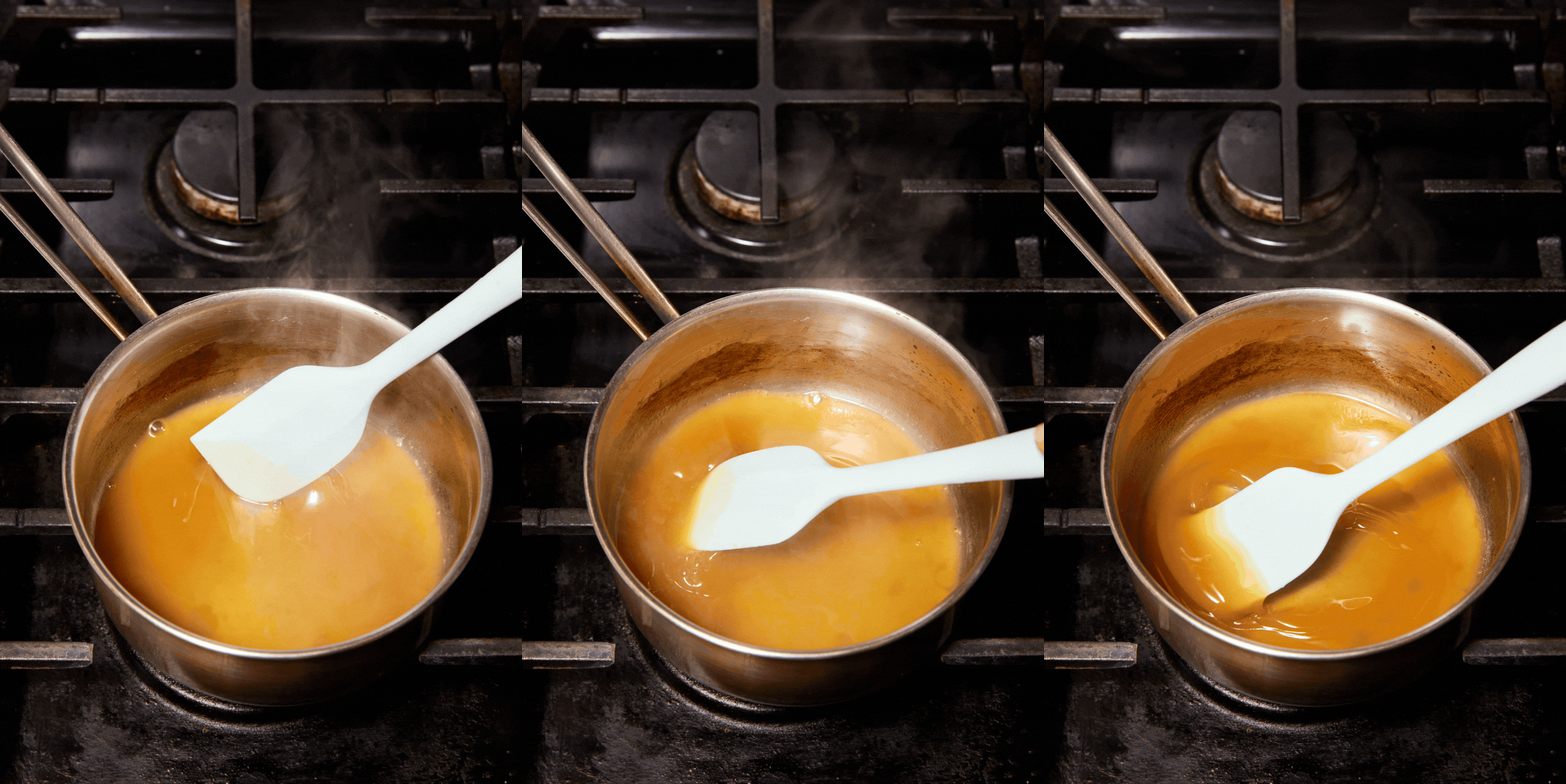
- Pour the pineapple juice into a small saucepan and bring it to a boil over high heat. Reduce the heat to low and simmer, uncovered, until the juice has reduced to about ¼ cup and thickened enough to coat the back of a spoon, 7 to 10 minutes. Keep an eye on it toward the end — it goes from syrupy to scorched quickly. Remove from the heat.
- Let the reduced juice cool completely, about 10 minutes. This step matters more than it sounds: cornstarch seizes into stubborn lumps the instant it hits hot liquid, and once they form, no amount of whisking will smooth them out. To speed things up, pour the reduction into a small bowl and pop it in the fridge for 5 minutes.
- Once the reduction is cool to the touch, whisk in the soy sauce, rice wine, chicken broth, sesame oil, rice vinegar, garlic powder, ginger, red pepper flakes, and cornstarch. Whisk until completely smooth and no white specks of starch remain. Set aside.
Cook and finish:
- Coat a large skillet generously with nonstick oil spray and warm over medium-high heat. Remove the chicken from the marinade with a slotted spoon or tongs, letting the excess drip off (discard the leftover marinade), and add it to the hot pan in a single layer. Cook without moving for 3 minutes to get some color, then stir and continue cooking until the pieces are cooked through and no longer pink in the center, about 4 minutes more. If your skillet is on the smaller side, cook the chicken in two batches — crowded chicken steams instead of sears.
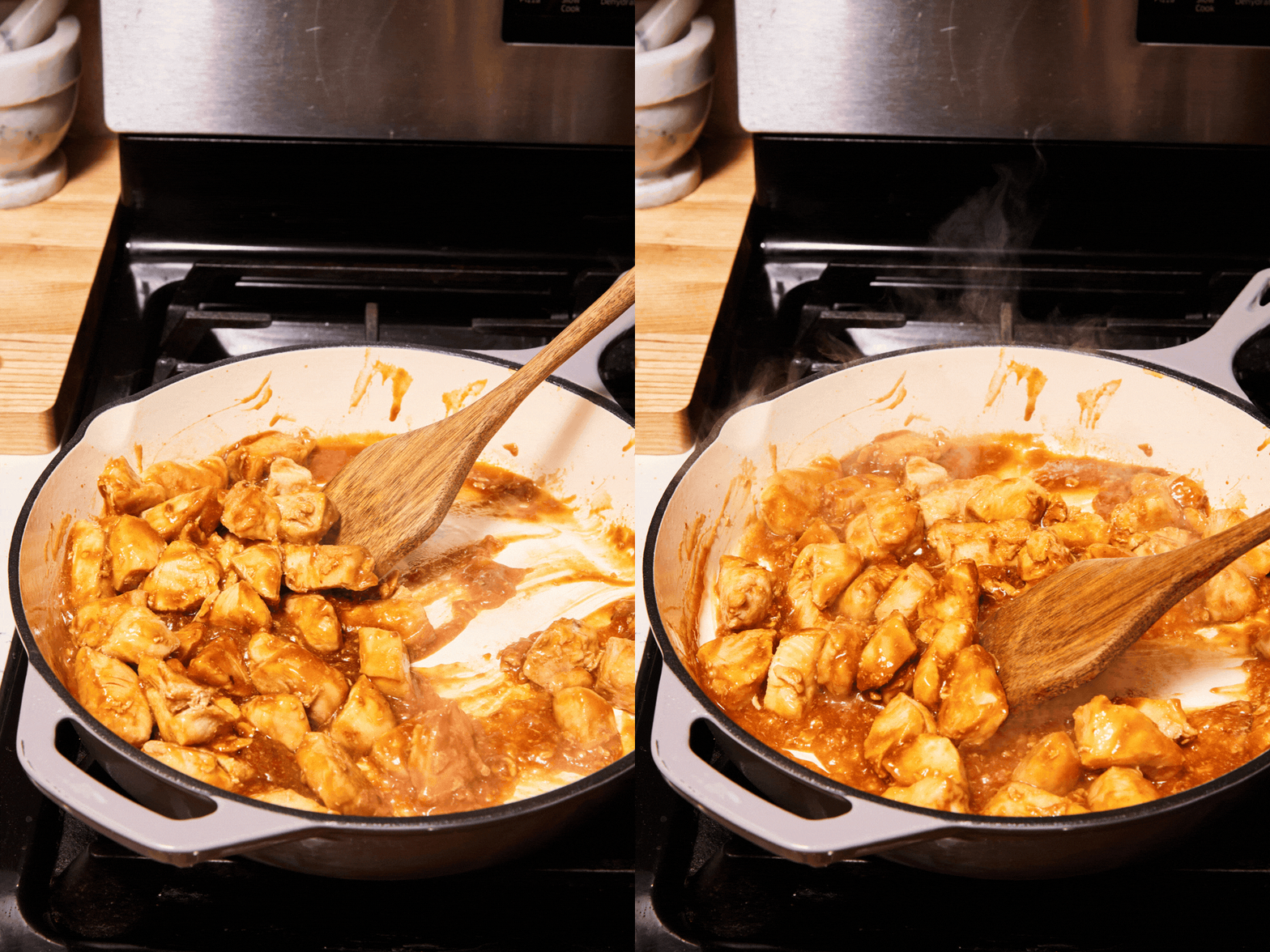
- Give the sauce one more quick whisk (the cornstarch settles fast) and pour it into the skillet with the chicken. Stir constantly, scraping the bottom of the pan, until the sauce bubbles and thickens into a glossy glaze that clings to every piece, 2 to 3 minutes.
- Remove from the heat, scatter the scallions and optional sesame seeds over the top, and serve right away, while the glaze is at its shiniest.