

Mediterranean Quinoa Quiche Biscuits

If you want all the comfort of a carb-y biscuit with real nutrition and protein to back it up — you just found it.

Save This Recipe
The secret is cooked quinoa. It adds moisture, a boost of protein and fiber, and a satisfying heartiness that sets these apart from any biscuit you’ve made before. Got leftover quinoa in the fridge? You’re already halfway there — this is exactly the recipe for it.
These Mediterranean Quinoa Quiche Biscuits are hearty, nourishing, and genuinely versatile. Breakfast, lunch, dinner, or a satisfying snack — they work every time.
The add-ins are just as flexible.
The Mediterranean mix I use here —spinach, artichokes, feta, fresh herbs — is a combination I keep coming back to but treat it as a starting point. Swap the artichokes for roasted red pepper, trade the feta for parm, or add in sun-dried tomatoes and olives. The base holds up to whatever you’re working with….just pay attention to the volume of add-ins so you have enough batter to hold it all together.
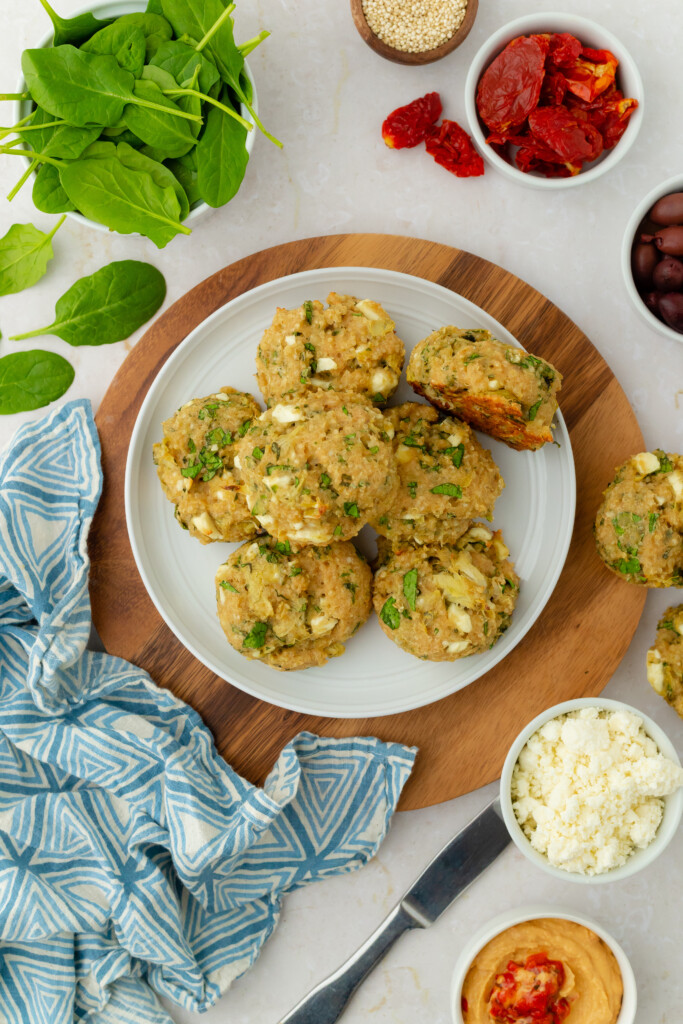
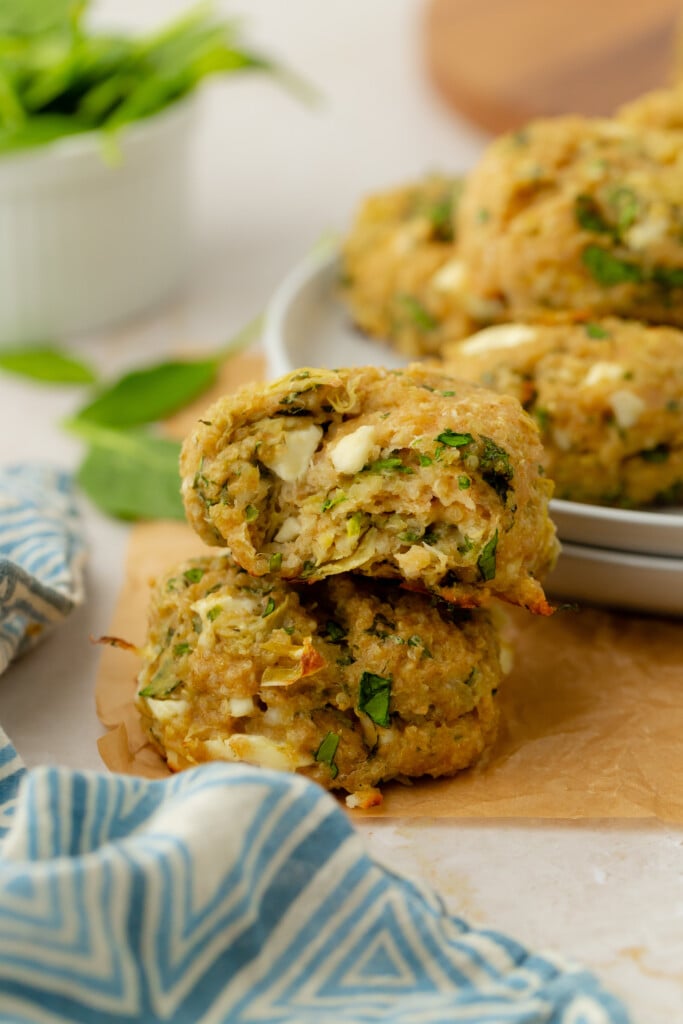
These biscuits are sturdy enough to stand on their own, but equally at home alongside a bowl of soup, a bright salad, or cozy main. And they’re DELISH drizzled with hot honey or a spread of soft butter. They’re also a meal prep dream: bake a big batch, freeze half, and you’ve got a quick, nourishing heat-and-eat option ready whenever you need it.
If you love grab-and-go protein recipes, try these options, too:
- Cheddar Protein Biscuits
- Blueberry Protein Breakfast Pastries
- Frittata Muffins
- High-Protein Bagels
- Healthy Bran Muffins
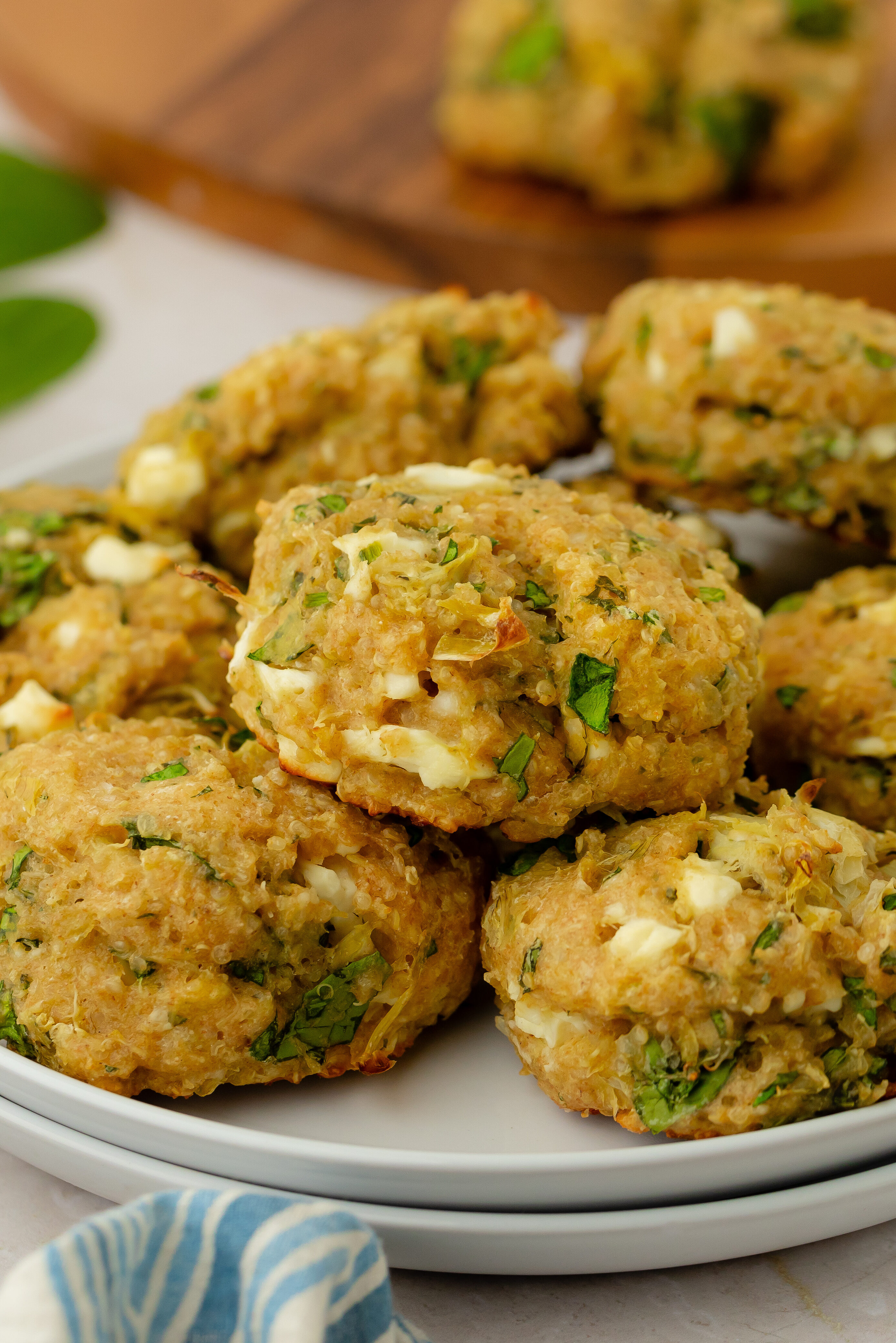
One more thing: the batter comes together in a single bowl. There’s one small trick that makes a real difference — sprinkle your baking powder and seasonings over the flour before mixing everything in. It ensures an even rise without an extra bowl to wash. Your sink will thank you! 😉
Prefer a muffin shape? Spoon the batter into a well-oiled muffin tin—same timing, same yield!
Try my Mediterranean Mug Omelet next!

Mediterranean Quinoa Quiche Biscuits
Ingredients
- 2 large eggs
- 1 cup nonfat or low-fat plain Greek yogurt
- 2 cups cooked quinoa, completely cooled*
- 1¼ cups whole wheat white flour, see notes for alternative flours
- 2 teaspoons baking powder
- 1½ teaspoons kosher salt, 1 teaspoon if using fine table salt
- 1 teaspoon garlic powder
- 1 teaspoon onion powder
- 1 cup finely chopped fresh spinach, lightly packed
- ¼ cup finely minced fresh basil, lightly packed or substitute dill, parsley, or chives
- 1 (14-ounce) can artichoke hearts (not marinated), very well drained, finely chopped, and patted dry
- 1 cup crumbled feta cheese, see notes for parmesan
Optional add-ins
- ½ cup chopped sun-dried tomatoes, drained (if oil-packed) and patted very dry
- ½ cup sliced olives, kalamata, black, or green
Instructions
- Preheat. Preheat your oven to 400°F and line a large baking sheet with parchment paper, giving it a light mist of nonstick spray. If you'd prefer to skip the parchment, just be generous with the spray to prevent sticking. (For muffins, generously grease a standard 12-cup muffin tin instead.)
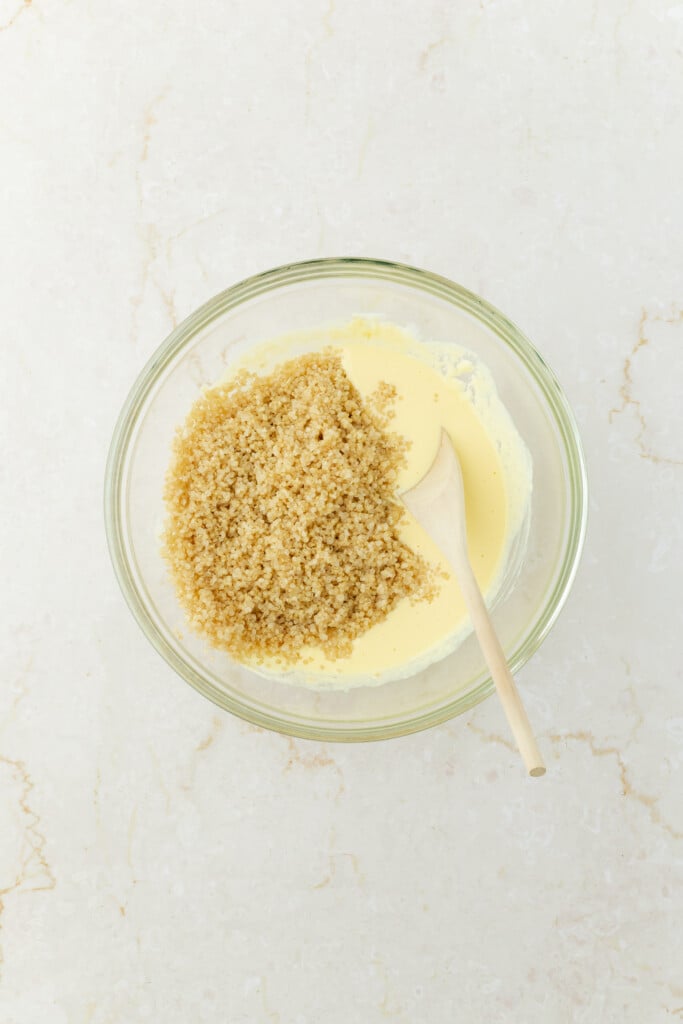
- Whisk the wet ingredients. In a large mixing bowl, whisk the eggs. Add the Greek yogurt and whisk until completely smooth and creamy. Stir in the cooled quinoa.
- Add dry ingredients (important trick!): Sprinkle the flour evenly over the mixture. Then sprinkle the baking powder, salt, garlic powder, and onion powder directly over the flour layer. Using a fork or small whisk, gently stir just the flour and dry ingredients together on the surface before fully mixing them into the wet mixture. This evenly distributes the baking powder for proper lift—no extra bowl needed and no bitter baking powder pockets.
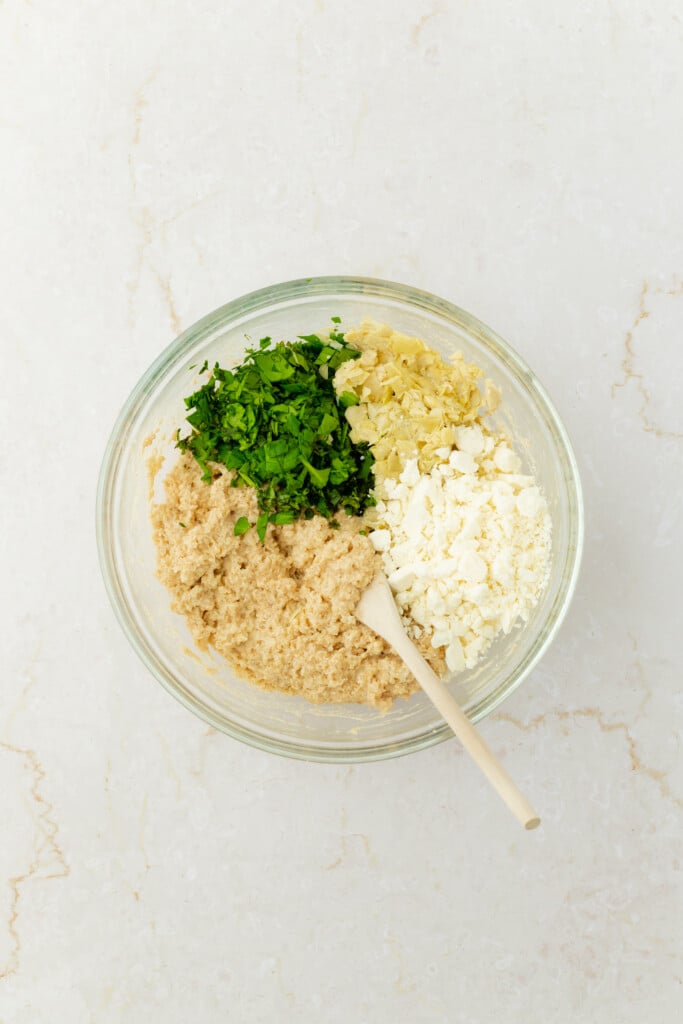
- Mix fully. Now stir everything together until no streaks of flour remain. The batter will be very thick and sticky—that’s exactly what you want. Gently fold in spinach, basil, artichokes, feta, and any optional add-ins.
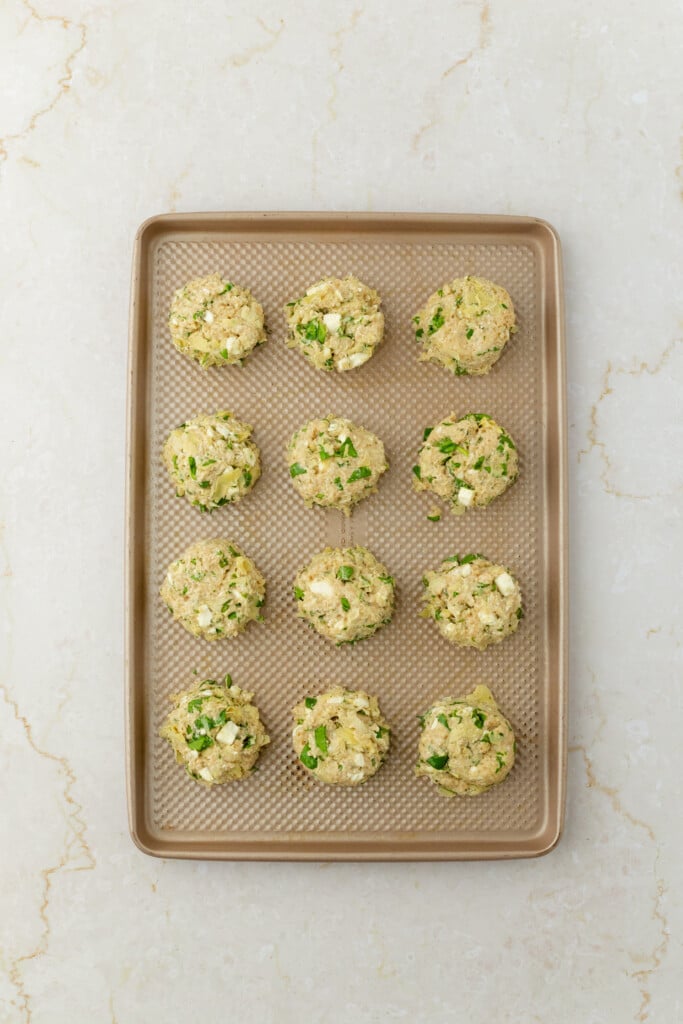
- Shape and bake. Lightly mist a ⅓-cup measuring cup with nonstick spray. Scoop and drop batter onto the prepared baking sheet to form 12 mounds. Using your hands, gently shape into rounded biscuits and lightly press the tops to slightly flatten. (Muffin-style: Divide the batter evenly among the oiled muffin cups, filling each one to the top.)
- Bake for 20 minutes, until tops and bottoms are golden brown and set. The centers should feel firm and spring back lightly. If needed, bake an additional 2–3 minutes until fully set. Let cool for 5–10 minutes before serving.
Notes
- Italian twist: Swap feta for Parmesan and add chopped roasted red peppers.
- Spicy: Add diced jalapeño and/or ¼ teaspoon red pepper flakes for a warm-Mediterranean-style heat.
- Herb-lovers: Add extra dill or parsley for an even fresher finish.
- Breakfast vibe: Add chopped cooked poultry sausage.
Can you use quinoa flour in place of ww flour?
Yes!! Diane, that’ll be a great swap if you have it in the house!
Joy,
Circling back regarding my prior comment. I did use quinoa flour but what I purchased was not finally ground so I will grind it next time. The biscuits are absolutely delicious full of flavor and really curb the need for something carby! Another one you knocked out of the park.
Hi Diane! Thank you so much for circling back — we really appreciate the update! That makes total sense about the quinoa flour. If it wasn’t finely ground, that could definitely affect the texture a bit. Grinding it finer next time should give you an even softer, more cohesive crumb. We’re thrilled to hear the biscuits were still absolutely delicious and flavorful — and we love that they helped curb that “carby” craving. Thank you for the kind words — your feedback truly means so much!— Eliza (Team Joy)
Hi Joy,
Can I use millet, brown rice or cous cous instead of quinoa?
Marlene
Hi Marlene! Millet or brown rice can work, but the texture will be a little different since quinoa has a slightly fluffier, lighter structure that helps the biscuits hold together nicely. If you use either one, just make sure it’s fully cooked, cooled, and not wet before mixing into the batter.
Couscous isn’t the best swap here, because it’s much softer and more delicate and can make the biscuits a bit mushy.
Quinoa really gives these their best texture…but if you experiment with millet or brown rice, they should still turn out tasty!!
I didn’t have artichokes so I added chopped black olives and sundried tomatoes. I also used half whole-wheat, half all-purpose flour. Turned out great! The texture is unique, not hard and crumbly but softer which make them easy for a grab and go snack or breakfast. I’m always looking for new options for healthy, high-protein things to make for my family and this is a winner! Thanks for the recipe.
Hilary coming in with the Mediterranean remix!! I love the swaps you made… and greatly appreciate you sharing your tweaks and this wonderful review! xx
Would chickpea flour be too heavy for these?
Hi Pamela! Chickpea flour can work, but it behaves differently than whole wheat flour, so I wouldn’t do a straight swap. I’d suggest starting with 3/4 to 1 cup chickpea flour (instead of 1¼ cups) and then see how the batter feels…it should be thick and scoopable, but not overly stiff or dry. You can always add more if the batter consistency can handle it.
Just know the texture will be a little more compact and hearty, with that slightly nutty chickpea flavor—but still really delish! If you try it, report back 😉 And if you’re curious, I also included options in the recipe notes for almond flour and a 1:1 gluten-free baking blend.
These are delicious!
Thank you so much, Margaret!! We’re so happy to hear you love them 🙂 — Eliza (Team Joy)