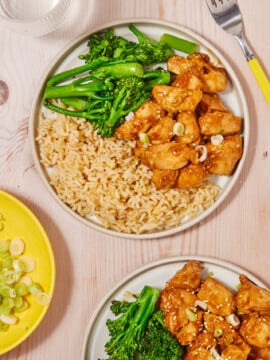
Healthier General Tso's Chicken (Easy Skillet Recipe)
This healthier General Tso’s Chicken features tender, velveted chicken breast coated in a glossy, sweet-and-spicy pineapple-soy glaze. It’s a protein-packed skillet dinner with no deep-frying and no added sugar in the sauce.
Ingredients
For the marinated chicken:
- 1 egg white
- 2 tablespoons reduced-sodium soy sauce
- 2 tablespoons Chinese rice wine or dry sherry
- 1½ pounds boneless, skinless chicken breasts, cut into 1-inch chunks
For the sauce:
- ¾ cup pineapple juice
- 3 tablespoons reduced-sodium soy sauce
- 1 tablespoon Chinese rice wine or dry sherry
- 3 tablespoons low-sodium chicken broth
- 1 teaspoon toasted sesame oil
- 1 teaspoon rice vinegar, see notes
- ¾ teaspoon garlic powder
- ¾ teaspoon ground ginger, or 2 teaspoons freshly grated ginger
- ¼ teaspoon crushed red pepper flakes
- 1 tablespoon cornstarch or arrowroot flour, see notes
To finish:
- 6 scallions, white and light green parts thinly sliced
- 1 tablespoon sesame seeds, optional
- Nonstick oil spray
Instructions
Marinate the chicken:
- In a medium bowl, whisk the egg white with the soy sauce and rice wine until the egg white is loosened and no longer stringy, about 30 seconds. Add the chicken and stir so every piece is evenly coated — the mixture will look thin and a little cloudy, which is exactly right. Cover the bowl (or transfer everything to a zip-top bag) and refrigerate for at least 30 minutes, or up to overnight.
Make the sauce:
- Pour the pineapple juice into a small saucepan and bring it to a boil over high heat. Reduce the heat to low and simmer, uncovered, until the juice has reduced to about ¼ cup and thickened enough to coat the back of a spoon, 7 to 10 minutes. Keep an eye on it toward the end — it goes from syrupy to scorched quickly. Remove from the heat.
- Let the reduced juice cool completely, about 10 minutes. This step matters more than it sounds: cornstarch seizes into stubborn lumps the instant it hits hot liquid, and once they form, no amount of whisking will smooth them out. To speed things up, pour the reduction into a small bowl and pop it in the fridge for 5 minutes.
- Once the reduction is cool to the touch, whisk in the soy sauce, rice wine, chicken broth, sesame oil, rice vinegar, garlic powder, ginger, red pepper flakes, and cornstarch. Whisk until completely smooth and no white specks of starch remain. Set aside.
Cook and finish:
- Coat a large skillet generously with nonstick oil spray and warm over medium-high heat. Remove the chicken from the marinade with a slotted spoon or tongs, letting the excess drip off (discard the leftover marinade), and add it to the hot pan in a single layer. Cook without moving for 3 minutes to get some color, then stir and continue cooking until the pieces are cooked through and no longer pink in the center, about 4 minutes more. If your skillet is on the smaller side, cook the chicken in two batches — crowded chicken steams instead of sears.
- Give the sauce one more quick whisk (the cornstarch settles fast) and pour it into the skillet with the chicken. Stir constantly, scraping the bottom of the pan, until the sauce bubbles and thickens into a glossy glaze that clings to every piece, 2 to 3 minutes.
- Remove from the heat, scatter the scallions and optional sesame seeds over the top, and serve right away, while the glaze is at its shiniest.
Notes
Why the juice has to cool. I know it's tempting to keep the momentum going, but adding cornstarch to hot pineapple reduction is the single most common way this recipe goes sideways. Warm-to-the-touch is fine; steaming hot is not. If you do end up with lumps, pour the sauce through a fine-mesh strainer before it goes in the pan and carry on — no one will know.
The splash of rice vinegar. A teaspoon of rice vinegar is a small addition with a big payoff: it sharpens the pineapple's sweetness and keeps the sauce from tasting flat or one-note. If you don't have rice vinegar, apple cider vinegar or fresh lemon juice will do the same job.
All about arrowroot. Arrowroot goes by several names — arrowroot flour, arrowroot starch, arrowroot powder, ground arrowroot — and they're all the same thing. It swaps in for cornstarch measure for measure and gives a slightly glossier, more translucent glaze. One quirk: arrowroot thickens fast and can thin out if it boils too long, so pull the pan off the heat as soon as the sauce coats the chicken.
Make it a full meal. This is a protein-packed dish that begs for something green alongside it. Steamed or roasted broccoli is the classic partner. Snow peas, bok choy, or a pile of shredded cabbage all work beautifully, too. Serve over brown rice, cauliflower rice, or quinoa to soak up every drop of that glaze.
Want more heat? The ¼ teaspoon of red pepper flakes gives you a gentle warm hum rather than a true kick. Bump it to ½ or even a full teaspoon if you like your General Tso's fiery, or pass extra flakes at the table so everyone can customize their own bowl.
Trimming the sodium further. Between the marinade and the sauce this recipe uses reduced-sodium soy sauce throughout, and most of the marinade gets discarded rather than eaten. If you're watching sodium closely, cut the sauce's soy sauce back to 2 tablespoons and make up the difference with an extra tablespoon of low-sodium broth. You'll shave off roughly 150 mg per serving with barely any change in flavor.
Make-ahead strategy. The chicken can marinate up to 24 hours ahead, and the finished sauce keeps in a covered jar in the fridge for up to 3 days — just shake or whisk it well before using, since the starch settles. With both done in advance, dinner is about 10 minutes of actual cooking.
Storage. This one is at its very best served fresh, while the glaze is glossy and the chicken is juicy. Leftovers will keep in an airtight container in the refrigerator for up to 3 days; reheat gently in a skillet over medium-low heat with a splash of water or broth to loosen the sauce, which firms up when chilled
Nutrition Information per serving
Calories: 260Carbohydrates: 15gProtein: 36gTotal Fat: 6.5g— Unsaturated Fat: 1g— Saturated Fat: 5.5gCholesterol: 105mgSodium: 790mgFiber: 0.5gTotal Sugar: 8g— Natural Sugar: 8g— Added Sugar: 0g
Nutrition information is calculated using a leading industry software. That being said, brands can vary, and there may be slight fluctuations in the numbers.