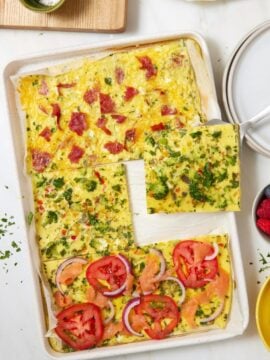
Easy Sheet Pan Omelets
These fluffy Sheet Pan Omelets bake six servings at once and can be customized with veggies, cheese, turkey bacon, lox and more. An easy, protein-rich breakfast for families, brunches and busy mornings.
Ingredients
- 8 large whole eggs*
- 4 large egg whites*
- 2 tablespoons milk of choice
- ½ teaspoon kosher salt
- ¼ teaspoon ground black pepper
- 2 to 4 tablespoons chopped fresh herbs, optional (like dill, basil, parsley, chives, thyme)
- Nonstick oil spray, for the pan
- Toppings of choice: sautéed veggies, cooked bacon or sausage, shredded cheese, lox, sliced tomato, red onion, etc. (see notes for my three favorite combos—and for which toppings go on before baking vs. after)
Instructions
- Preheat the oven to 375°F with a rack in the middle position (double-check that the rack sits level so your eggs bake evenly). Line a rimmed quarter sheet pan or metal 9x13-inch baking pan with parchment paper, then mist the parchment with nonstick oil spray. The parchment is your no-stick insurance policy—it lets you lift the whole omelet right out of the pan for clean, easy cutting.
- In a large mixing bowl, whisk the eggs, egg whites, and milk until the mixture is well blended and a little frothy, with no streaks of white remaining. Whisk in the salt, pepper, and optional herbs.
- Pour the egg mixture into the prepared pan. Now the fun part: decorate the top with your pre-bake toppings. You can go with one flavor across the whole pan, or divide it into two or three sections and vary it up, like I do. Just remember the golden rule—any veggies or meats going on before baking should be fully cooked and patted dry (see notes), and delicate toppings like lox, fresh tomato, and raw onion wait until after baking.
- Bake for 20 to 25 minutes, until the eggs are just set in the center with no jiggle when you gently shake the pan (start checking at the 18-minute mark—ovens vary, and pulling the eggs at “just set” is the difference between silky and rubbery; they’ll finish firming up with carryover heat).
- Let rest in the pan for 3 to 5 minutes, then use the parchment to lift the whole omelet onto a cutting board. Cut into 6 squares, add any after-baking toppings, and serve warm.
Notes
Toppings before vs. after: This is the key to sheet pan omelet success! Sturdy, cooked toppings (sautéed veggies, cooked bacon or sausage, shredded cheese) go on before baking. Delicate toppings (lox, sliced fresh tomato, raw red onion, avocado, fresh herbs) go on after baking. Lox in particular will overcook in the oven, so treat that square like a bagel spread: bake the eggs plain or with onion, then drape the lox and tomato on top of the warm squares.
Cook veggies first (and dry them off): Vegetables hold a lot of water, and excess moisture is the #1 cause of soggy squares. Sauté any veggies until the pan looks dry, then pat them with a paper towel before scattering over the eggs. Same rule for any combo—mushrooms, zucchini, and spinach especially need their moisture cooked off.
My three favorite omelet combos (each covers ⅓ of the pan):
• Vegetable medley: 1 cup sautéed, diced veggies, added before baking (130 calories, 13 g protein, 1 g fiber per square)
• Turkey bacon & cheese: 3 strips cooked, chopped turkey bacon + ¼ to ½ cup shredded cheese, added before baking (220 calories, 19 g protein, 0 g fiber per square)
• Tomato, lox & onion: 2 ounces lox + 1 sliced tomato + ¼ red onion, sliced into rings, added after baking (180 calories, 18 g protein, 1 g fiber per square)
Flavor boost: For extra savory depth, whisk a pinch of garlic powder and/or a tablespoon of grated Parmesan into the egg mixture. Subtle, but it makes the whole pan taste a little more special.
Make it a sandwich: Tuck a warm square into a toasted English muffin or wrap it in a whole-grain tortilla for a delicious grab-and-go breakfast sandwich.
Serving & storage: These omelets are truly at their best served fresh and warm from the oven. If you do have leftovers, store them in the fridge for up to 2 days (no longer), wrapped individually, and rewarm in the microwave for about 30 seconds before eating.
Nutrition Information per serving
Serving Size: 1 squareCalories: 120Carbohydrates: 1gProtein: 12gTotal Fat: 7g— Unsaturated Fat: 4.5g— Saturated Fat: 2.5gCholesterol: 280mgSodium: 240mgFiber: 0gTotal Sugar: 0g— Natural Sugar: 0g— Added Sugar: 0g
Nutrition information is calculated using a leading industry software. That being said, brands can vary, and there may be slight fluctuations in the numbers.